In addition to chronicling my journey as a writer (which, thanks to the previous entry, we're all caught up with), the second thing I want to do with this blog is to highlight/explore/analyze great writing.
Where better to begin than by examining two of the more important elements in writing a story:
• voice, and
• show, don't tell
Now, as a refresher, voice is the holiest of holies for literary agents and editors (and probably readers, too). According to my 7th Grade literature text book,
"Voice refers to a writer's unique use of language that allows a reader to "hear" a human personality in the writer's work."
Voice also includes elements like word choice, sentence structuring, and the ability to convey a mood or a tone.
Perhaps the best way to understand the effectiveness of voice is to look at examples. First up we have the beginning of a little-known MG fantasy book called The Lightning Thief:

"Look, I didn’t want to be a half-blood.
If you’re reading this because you
think you might be one, my advice is:
close this book right now.
Believe whatever lie your mom or dad told you about your birth, and try
to lead a normal life.
Being a half-blood is
dangerous. It’s scary. Most of the time, it gets you killed in
painful, nasty ways.
If you’re a normal kid, reading this
because you think it’s fiction, great.
Read on. I envy you for being able to believe that none of this ever
happened.
But if you recognize yourself in
these pages – if you feel something stirring inside – stop reading
immediately. You might be one of
us. And once you know that, it’s only a
matter of time before they sense it
too, and they’ll come for you.
Don’t say I didn’t warn you.
My name is Percy
Jackson.
I’m
twelve years old. Until a few months
ago, I was a boarding student at Yancy Academy, a private school for troubled
kids in upstate New York.
Am I a troubled kid?
Yeah. You could say that."
Am I a troubled kid?
Yeah. You could say that."
A couple of comments:
1) In my classes, I always use this as a great example of voice. Percy Jackson could be a kid in the classroom; he sounds like a twelve-year-old. What he doesn't sound like is author Rick Riordan. (I guess I should point out that I don't known Rick Riordan so maybe he does sound like a twelve-year-old, but I'm guessing he doesn't.)
2) A side note: a kid once told me: "I used to hate reading. Then I read the Lighting Thief." That is the power of voice done right.
Here's another example, the third paragraph from a book you probably never have heard of, The Hunger Games:
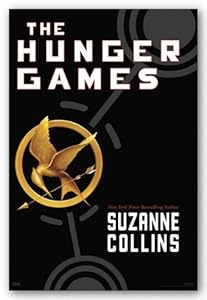
"Sitting at Prim’s knees, guarding her, is the world’s ugliest cat. Mashed-in nose, half of one ear missing, eyes the color of rotting squash. Prim named him Buttercup, insisting that his muddy yellow coat matched the bright flower. He hates me. Or at least distrusts me. Even though it was years ago, I think he still remembers how I tried to drown him in a bucket when Prim brought him home. Scrawny kitten, belly swollen with worms, crawling with fleas. The last thing I needed was another mouth to feed. But Prim begged so hard, cried even, I had to let him stay. It turned out okay. My mother got rid of the vermin and he’s a born mouser. Even catches the occasional rat. Sometimes, when I clean a kill, I feed Buttercup the entrails. He has stopped hissing at me.
Entrails. No hissing.
This is the closest we will ever come to love."
A couple of comments:
1) Again, the personality shines through. And, just like the previous example, this excerpt is in the first person point of view. Which is infinitely easier for voice to be heard and identified. I think once you shift to third person, voice is still important, it's still there, but it's not so in-your-face.
2) As great as this example is at showing voice, I think it does an even better job of characterization via show, don't tell. Author Suzanne Collins could have used a number of adjectives to tell us that her protagonist, Katniss, is tough, she's hard, she's a survivor... but damn, look how more effective it is to show us. Who drowns cats? That's cold, man! She hunts and kills to put food on the table, and then gives the entrails to the cat? Katniss is most definitely not cut from the Sweet Valley High mold...

No comments:
Post a Comment