Pages

Thursday, March 19, 2020

"We like the dark. Dark for dark business!"

       
Image result for an unexpected party
 As a product of pop culture, there are a lot of catch phrases from movies, songs, and books stuck in my head, absorbed at some point over the years and relegated to the back recesses of my mind, ready to re-emerge when the moment calls for it. Like when you feel the need to announce that you have to use the facilities ("Gotta go see a man about a wallaby"), or commenting on a buddy's outdated sense of fashion ("Does Barry Manilow know that you raid his wardrobe?"), or when you are told to shelter-in-place by the governor for the foreseeable future, with work and school unfolding together at home for the entire family ("Looks like I picked the wrong week to stop sniffing glue.")

Or when the lights are turned low and someone claims that it's too dark: "We like the dark. Dark for dark business!"

The backstory and build-up to this line, as delivered in Chapter 1 of The Hobbit, might just be my favorite bit o' fantasy writing:


          "...the music began all at once, so sudden and sweet that Bilbo forgot everything else, and was swept away into dark lands under strange moons, far over The Water and very far from his hobbit-hole under The Hill.
          The dark came into the room from the little window that opened in the side of The Hill; the fire flickered - it was April - and still they played on, while the shadow of Gandalf's beard wagged against the wall.
          The dark filled all the room, and the fire died down, and the shadows were lost, and still they played on. And suddenly first one and then another began to sing as they played, deep-throated singing of the dwarves in the deep places of their ancient homes...


Far over the mountains cold
To dungeons deep and caverns old
We must away ere break of day
To seek the pale enchanted gold...

          As they sang the hobbit felt the love of beautiful things made by hands and by cunning and by magic moving through him, a fierce and a jealous love, the desire of the hearts of dwarves. Then something Tookish woke up inside of him, and he wished to go and see the great mountains, and hear the pine-trees and the waterfalls, and explore the caves, and wear a sword instead of a walking-stick. He looked out of the window. The stars were out in a dark sky above the trees. He thought of the jewels of the dwarves shining in dark caverns. Suddenly in the wood beyond The Water a flame leapt up - probably somebody lighting a wood-fire - and he thought of plundering dragons settling on his quiet Hill and kindling it all to flames. He shuddered; and very quickly he was plain Mr. Baggins of Bag-End, Under-Hill, again.
          He got up trembling. He had less than half a mind to fetch the lamp, and more than half a mind to pretend to, and go and hide behind the beer-barrels in the cellar, and not come out again until all the dwarves had gone away. Suddenly he found that the music and the singing had stopped, and they were all looking at him with eyes shining in the dark.
          "Where are you going?" said Thorin, in a tone that seemed to show that he had guessed both halves of the hobbit's mind.
          "What about a little light?" said Bilbo apologetically.
          "We like the dark," said all the dwarves. "Dark for dark business!"

Whatever one might say about the Peter Jackson version of the story, I think he nailed this scene:


Wednesday, May 22, 2019

Where I'm At Now... and On Most Days


From Stephen King, On Writing:

"Is there any rationale for building entire mansions of words? I think there is... Sometimes it's beautiful and we fall in love with all that story, more than any film or TV program could ever hope to provide. Even after a thousand pages we don't want to leave the world the writer has made for us, or the make-believe people who live there.

The Rings trilogy of J.R.R. Tolkien is a perfect example of this. A thousand pages of hobbits hasn't been enough for three generations of post-World War II fantasy fans... Hence Terry Brooks, Piers Anthony, Robert Jordan... and half a hundred others. The writers of these books are creating the hobbits they still love and pine for; they are trying to bring Frodo and Sam back from the Grey Havens because Tolkien is no longer around to do it for them."

Thursday, July 26, 2018

The Art of the Pitch

One of the more challenging things about readying a manuscript for submission is coming up with the hook - the one sentence description that fully encapsulates a story in all of its complexities. 

And oh yeah, it's got to instantly interest the (potential) reader.

In the film industry, they call it the "elevator pitch."  As in, you have the duration of a short elevator ride to sell a movie executive on the appeal of your story premise.

In the age of Twitter, with all of the pitch contests running throughout the year, it's an essential weapon in the writing arsenal.

Observing how other authors tackle this deceptively simple and innocent task has become a personal pastime and, without a doubt, my favorite has to be Jay Kristoff.

Case in point - here's his pitch for his latest book, LIFELIK3:

Image result for jay kristoff lifelike pitch


"It's Romeo & Juliet meets Mad Max meets X-Men, with a little bit of Bladerunner cheering from the sidelines."


Yeah, sold.

Mr. Kristoff goes into a little bit more depth about the story in his blog, which is definitely worth a read. (I particularly found it fascinating to read his early blog entries on how his writing career took off).

And he clearly knows what he's doing because it's not the first time he has hit a pitch out of the ball park.  Check out his description of Illuminae:

"ILLUMINAE is the classic tale of Girl Meets Boy:

description

Girl Loses Boy:

description

And Parents:

description

And Planet:

description

and Ends Up on a Crippled Spaceship:

description
description

with a Mad Computer:

description

and a Deadly Virus Outbreak:

description

in the Middle of an Interstellar War:

description

It's without a doubt the coolest book I've ever written.

I'm pretty sure you've never read a book like it.

So . . . enjoy!"
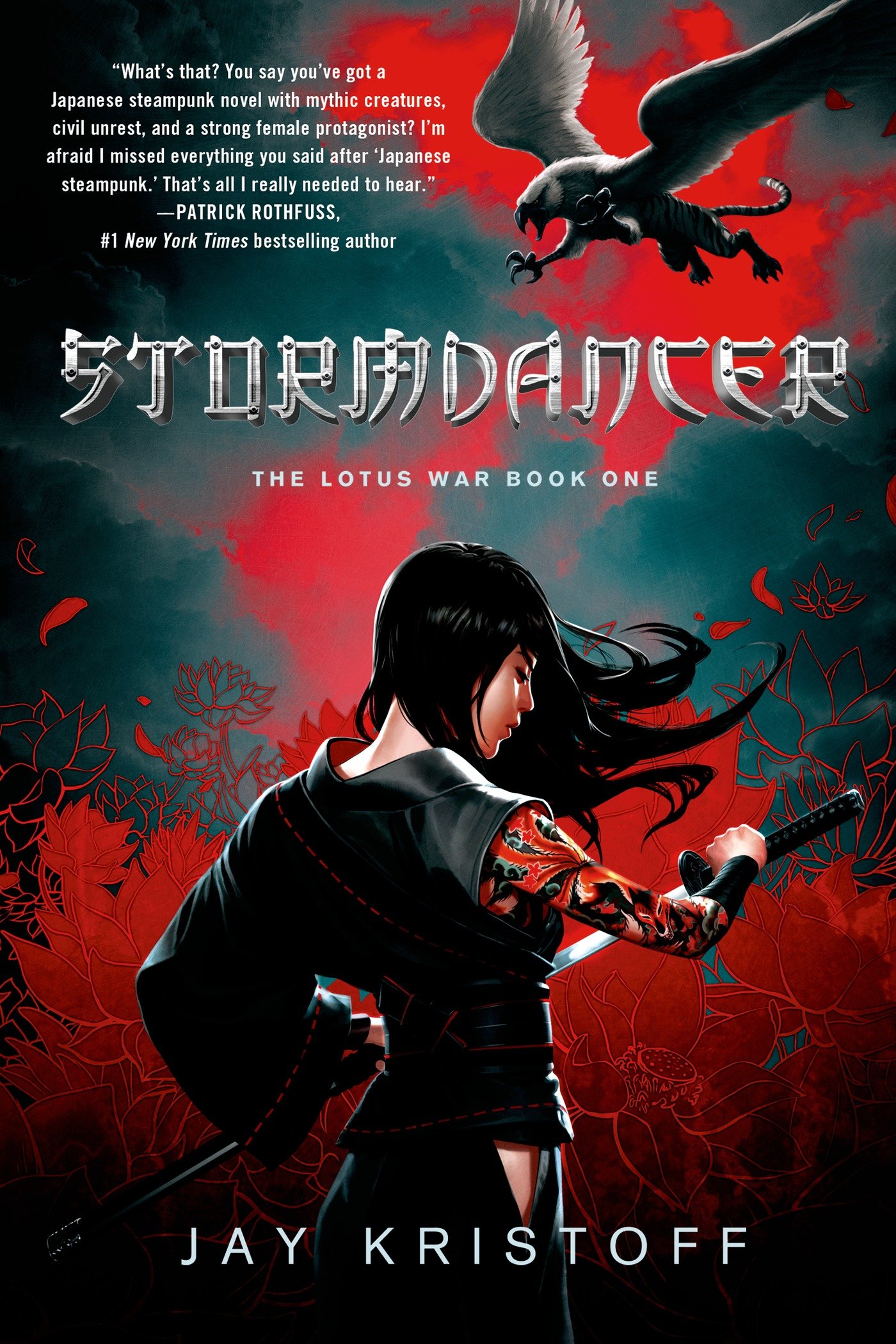
Even established authors have been happily sucked in by his pitches, as seen by this blurb from Patrick Rothfuss on the cover Kristoff's first novel, Stormdancer:

Image result for stormdancer jay kristoff


"What's that?  You say you've got a Japanese steampunk novel with mythic creatures, civil unrest, and a strong female protagonist?  I'm afraid I missed everything you said after 'Japanese steampunk.'  That's all I really needed to hear."

      Patrick Rothfuss


It brings to mind a great quote from author Chuck Wendig:  "Focusing on GETTING PUBLISHED instead of WRITING COOL SHIT is a danger, because you've set the wrong metric for yourself."

Well said, Chuck.  And Jay?  Mission accomplished on both fronts.  Keep it coming.

Saturday, February 18, 2017

You Never Get a Second Chance to Make a First Impression

As it turns out, you can judge a book by its cover.          

And by the first chapter, the first 5 pages, the first 250 words, and the first sentence.

You can even judge a book by a 140-character summary on Twitter.

Welcome to the world of publishing in the 21st century, where it's all about that all-important first impression.

Advice on hooking readers from the get-go abounds, but one of my favorite observations on the topic comes from fantasy author Brian Staveley and his blog-entry, "Shakira and Usher Hate Tolkien; Opening Sentences in Fantasy."

The whole article is excellent and well-worth a read, but there's one part that stands out.  Staveley compares the opening scenes of 4 fantasy books that were published before 1990 and 4 that were published afterwards:

"Kicking off the old books we have: 


• a birthday party (The Fellowship of the Ring, by JRR Tolkien), 

• the description of a trail (The Sword of Shannara, by Terry Brooks),

• the sights and smells of a kitchen (Pawn of Prophecy, by David Eddings),

• and some geography... that also sounds suspiciously like history (The Wizard of Earthseaby Ursula Le Guin)


In the new books, by contrast, we have: 


• a beheading (A Game of Thrones, by GRR Martin), 

• a strangling (The Lies of Locke Lamorra, by Scott Lynch),

• the potential death of the POV character (The Blade Itself, by Joe Abercrombie),

• and a soulless Reaper (The Killing Moon, by NK Jemisin)


Yikes.

Makes me wonder:  would those four pre-1990 books - all excellent, all classics, all examples of the best ever in the genre - get rejected by today's literary agents and publishers, simply because they don't start with a bang?

I would hope not.

Then again, if those books debuted in 2017, they might start out a little differently than they originally did:

"I began The Sword of Shannara, way back in 1977, with a long descriptive passage that set the scene and gave the reader a leisurely first look at one of the protagonists.  Really, I meandered about for almost the first hundred pages.  I got away with it then, but I wouldn't think of doing that in today's entertainment climate."
                                                                                   Terry Brooks, Sometimes the Magic Works


Friday, November 6, 2015

Words of Wisdom

I think I would be just as big a fan of Game of Thrones if it was just about Jon Snow and Tyrion:

"Had I been born a peasant, they might have left me out to die, or sold me to some slaver's grotesquerie.  Alas, I was born a Lannister of Casterly Rock, and the grotesqueries are all the poorer.  Things are expected of me.  My father was the Hand of the King for twenty years.  My brother later killed that very same king, as it turns out, but life is full of these little ironies.  My sister married the new king and my repulsive nephew will be king after him.

I must do my part for the honor of my House, wouldn't you agree?  Yet how?  Well, my legs may be too small for my body, but my head is too large, although I prefer to think it is just large enough for my mind.  I have a realistic grasp of my own strengths and weaknesses.

My mind is my weapon.  My brother has his sword, King Robert his warhammer, and I have my mind... and a mind needs books as a sword needs a whetstone, if it is to keep its edge."

Tyrion tapped the leather cover of the book.  "That's why I read so much, Jon Snow."


It's been a long time since I rock and rolled...

Funny how going back to school and having a day job again can get in the way of important endeavors like blogging.  Didn't mean to sign off for so long but lesson plans and grading don't get done by themselves.

The last few months have been very eventful for me on the writing front, day job notwithstanding.  Some highlights:

• I discovered how to use twitter as a writing resource.  Narrowing my long-dormant twitter feed to various happenings in the writing community (read: I started using twitter to follow literary agents, editors, other writers exclusively) has opened up a whole new world of possibilities.  Namely...

• I participated in a number of writing contests.  Just in the last three months, I participated in PitchWars, Nightmare on Query Street, and PitchSlam!  Didn't win (or even advance in) any of those contests but the payoff has been significant in terms of honing my craft, connecting with others on the same journey as me, and making general progress in writing pitches and query letters.  And speaking of connecting with others...

• I attended my first writers' conference.  Going to my local SCBWI's annual fall conference may have been the most transformative experience of all.  Among the many things I took away from the event, a few standout:
     
1) I had my first 10 pages of my manuscript critiqued by an editor at Bloomsbury.  Good feedback has been hard to find and I greatly appreciated the insights and impressions he shared me with.  Some of his suggestions validated things I had been thinking about (switching from YA to MG), while others (the need to develop setting more) apparently flew under my radar.

2) I really need to join a critique group.

In conclusion, while the ultimate goal of getting published has yet to be met, progress is being made.  And so the journey continues.


Tuesday, August 18, 2015

Must See TV

When staring up at the wall of insurmountable obstacles standing in the way of a novel breaking through to publication and reaching a broad audience, I'm reminded of another success story - about how someone's creative vision overcame early set backs and all-but-certain failure to reach critical and popular acclaim.

But this story is not about a novel.

It's about a TV show.

In 1989, NBC aired the pilot of a new sitcom.  Critics and audiences were unimpressed; the pilot bombed and plans for a full season were scrapped.  But one NBC executive, believing in the show's potential, ordered four new episodes, which aired a year later in 1990.  The ratings were just high enough to justify a second season.

In 1991, the second season began, but after a string of low ratings, NBC pulled the show and put it on hiatus, leaving it seemingly dead in the water.